
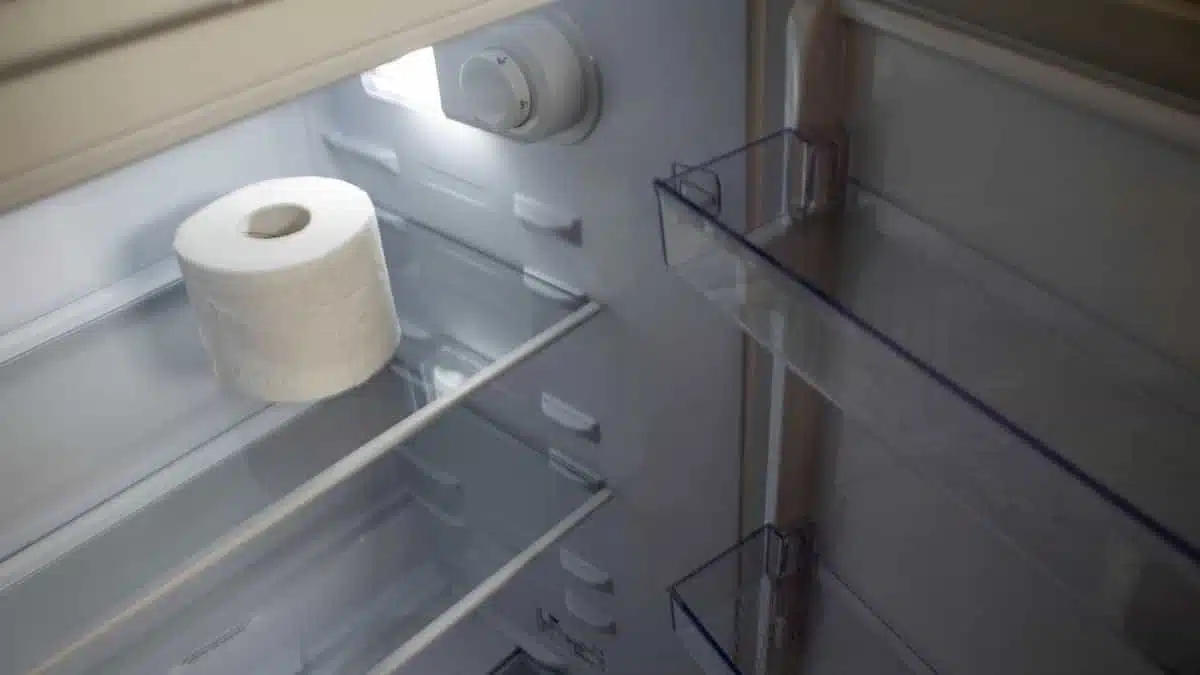
If you’re searching for innovative ways to maintain freshness in your kitchen, this simple trick might surprise you. Placing an ordinary roll of toilet paper inside your refrigerator provides remarkable benefits that go beyond conventional wisdom. This absorbent bathroom staple transforms into a powerful tool for controlling unwanted scents and dampness in your food storage space.
Understanding how absorbent materials combat refrigerator problems
The confined environment of your refrigerator creates unique challenges that many homeowners overlook. Cold temperatures combined with varying humidity levels from different foods create conditions where moisture can accumulate rapidly. This dampness doesn’t just make surfaces wet; it encourages bacterial proliferation and accelerates food deterioration.
Toilet paper’s cellulose fiber structure creates an extensive network capable of capturing water molecules through natural capillary action. When positioned strategically, these fibers work continuously to draw excess humidity from the surrounding air. This process mirrors how commercial desiccants function, yet costs significantly less and utilizes something most households already purchase regularly.
The odor-neutralizing capacity stems from adsorption, where airborne scent particles physically attach to the paper’s surface. Unlike air fresheners that merely mask smells, this method actually captures the molecules responsible for unpleasant aromas. Strong-smelling items like certain cheeses, seafood, or pungent leftovers release volatile compounds that can transfer between foods, affecting taste and quality. The absorbent roll acts as a barrier, preventing these transfers and maintaining the distinct flavors of stored ingredients.
For those maintaining daily habits that promote well-being, this simple solution demonstrates how small adjustments create meaningful improvements. Fresh, unscented varieties work best to avoid introducing artificial fragrances into your food environment. The material’s natural composition means you’re not adding chemicals or synthetic substances near edibles.
Strategic placement techniques for maximum effectiveness
Location determines how well this method performs in your specific refrigerator configuration. Areas with minimal air circulation benefit most from this intervention, as these zones tend to accumulate the highest moisture concentrations. The rear section typically experiences the least airflow since it sits furthest from the door’s opening and closing cycles.
Vegetable crisper drawers represent another optimal placement location. These enclosed compartments trap humidity released by fresh produce, creating microenvironments prone to dampness. Positioning a compact roll in these drawers helps preserve vegetables longer by maintaining better moisture balance. Some users prefer cutting standard rolls in half to maximize space efficiency while retaining absorption properties.
Consider these strategic positions for placement :
- Behind taller items on upper shelves where air stagnates
- In corners away from temperature-regulated vents
- Between containers storing particularly aromatic foods
- Inside specialized compartments for meats or cheeses
Regular monitoring ensures continued performance. Replace the roll when it feels noticeably damp or after approximately fourteen days, whichever comes first. This maintenance schedule prevents saturation that would reduce effectiveness. Visual inspection takes mere seconds during normal refrigerator use, making this an effortless addition to household routines.
Much like organizing spaces efficiently, as seen with innovative furniture solutions for small areas, strategic placement maximizes the benefits of available resources. Proper refrigerator organization complements this technique by promoting better airflow throughout the interior.
Broader applications and scientific foundations
While lacking extensive peer-reviewed research, this practice follows established physical principles that govern moisture management. The same properties that make paper products effective for their intended purpose enable this unconventional application. Cellulose’s molecular structure naturally attracts water molecules, creating bonds that remove humidity from surrounding air.
These moisture-controlling capabilities extend beyond refrigerator use. Households report success placing rolls in gym bags to combat mustiness, in shoe storage areas to prevent odor buildup, and in basement corners prone to dampness. The versatility demonstrates how reconsidering everyday items leads to creative problem-solving approaches.
Humidity control affects food preservation more directly than many realize. Excess moisture creates conditions favorable for mold development and accelerates decomposition processes in perishables. By maintaining optimal dampness levels, you extend shelf life and reduce waste. This approach aligns with practical strategies that contribute to maintaining freshness in various life aspects.
For those exploring engaging approaches to daily routines, this simple intervention exemplifies how minor adjustments yield noticeable improvements. The minimal financial investment required makes experimentation risk-free, encouraging household innovation.
Implementing this practical freshness solution
Starting this practice requires minimal effort and no special tools. Simply designate a fresh, unused roll specifically for refrigerator use, eliminating any concerns about hygiene. Position it in your chosen location, ensuring stability so it won’t roll around when moving items.
Track replacement dates using calendar reminders or notes on your refrigerator door. This prevents forgetting maintenance and ensures consistent performance. Some households rotate used rolls to secondary applications like garage deodorizing before final disposal, extending utility further.
The cost-effectiveness appeals particularly to those seeking budget-friendly household improvements. Unlike specialized refrigerator deodorizers that require regular purchases, toilet paper serves multiple purposes and costs considerably less. This practical mindset reflects approaches seen in planning for long-term satisfaction.
Environmental considerations exist regarding disposable paper products, yet this application extends usefulness before disposal. The biodegradable nature of cellulose means eventual environmental impact remains minimal. For sustainability-focused households, this represents a reasonable compromise between convenience and ecological responsibility.
Similar to how adaptive strategies help navigate challenges, this technique demonstrates resourcefulness in household management. Anecdotal evidence from numerous households and even hospitality settings suggests noticeable improvements in refrigerator freshness, making this worth experiencing firsthand to discover whether it becomes your preferred maintenance approach.
