
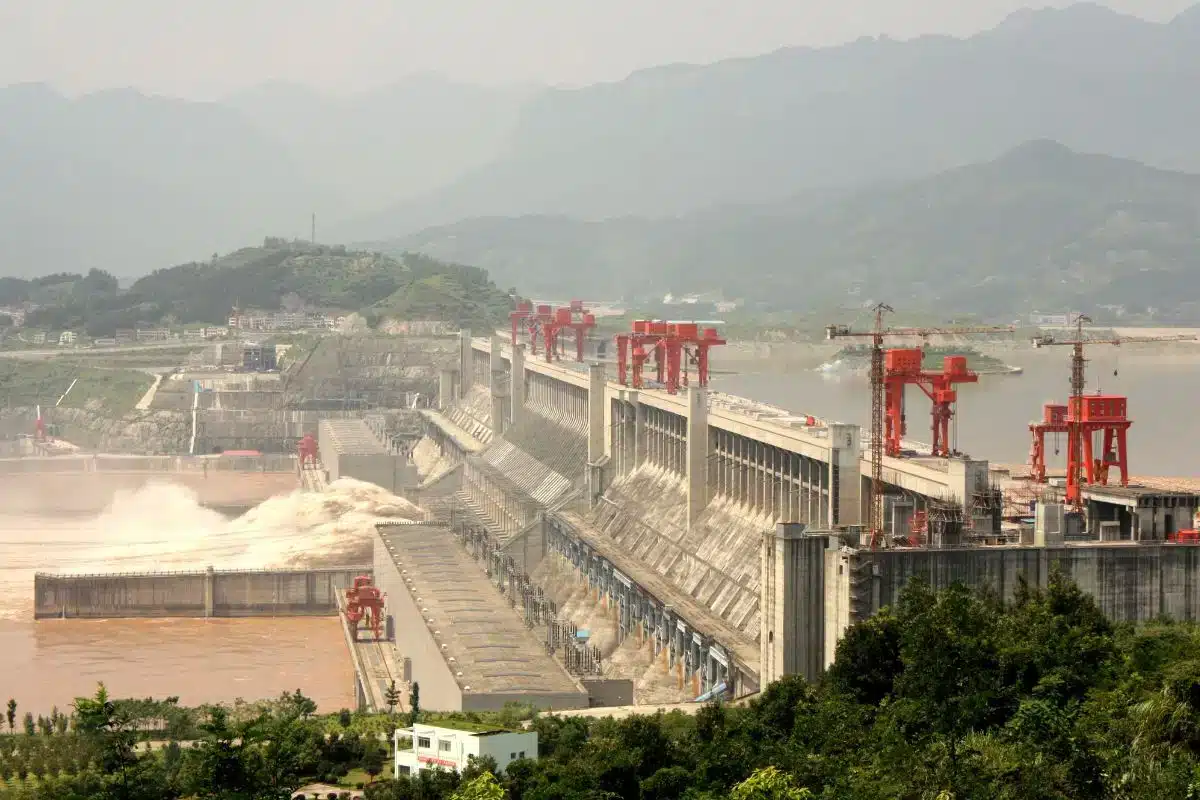
When humanity constructs massive infrastructure projects, few anticipate the potential consequences for fundamental planetary mechanics. Yet NASA scientists have documented precisely this phenomenon with China’s Three Gorges Dam. This colossal hydroelectric installation has demonstrably altered Earth’s rotation, extending the length of each day by measurable amounts. While these changes remain imperceptible to human experience, they represent a remarkable testament to engineering’s capacity for influencing basic celestial properties.
The dam’s construction created unprecedented mass redistribution across Earth’s surface, concentrating approximately 10 trillion gallons of water in a single location. This enormous volume shift generates sufficient force to modify our planet’s rotational characteristics through fundamental physics principles. The implications extend beyond simple engineering achievement, revealing humanity’s growing influence on planetary-scale systems.
How massive water concentration affects planetary mechanics
The Three Gorges Dam’s influence on Earth’s rotation operates through the moment of inertia principle, a fundamental concept in physics describing how mass distribution affects rotational velocity. Dr. Benjamin Fong Chao from NASA’s Goddard Space Flight Center explains that concentrating massive water volumes in the dam’s reservoir fundamentally alters the planet’s spinning characteristics. This phenomenon mirrors how figure skaters accelerate rotation by pulling their arms inward, except operating in reverse.
The structure’s reservoir, when operating at maximum capacity, holds water equivalent to roughly 42 cubic kilometers. This concentrated mass creates measurable changes in rotational dynamics, extending each Earth day by precisely 0.06 microseconds. While this increment seems infinitesimal, it demonstrates how human engineering can influence celestial mechanics traditionally considered beyond anthropogenic impact.
Scientists draw comparisons between the dam’s effects and natural geological events. The devastating 2004 Indian Ocean earthquake, for instance, shortened days by 2.68 microseconds through sudden tectonic plate movements. These natural phenomena provided the conceptual framework for understanding how mass redistribution events affect planetary rotation, whether caused by geological forces or human construction.
Beyond temporal alterations, the Three Gorges Dam shifts Earth’s geographic poles approximately two centimeters. This displacement makes our planet marginally flatter, demonstrating how modern megastructures can influence fundamental geographic characteristics. The accumulated water mass essentially redistributes Earth’s weight distribution, creating subtle but measurable changes in planetary shape.
The engineering scale behind rotational changes
Rising 175 meters above sea level near western Wuhan, the Three Gorges Dam represents China’s most ambitious infrastructure undertaking. The Chinese government invested ¥203 billion (approximately $31.765 billion) creating this massive power generation facility. Daily electricity production reaches 0.54 terawatt-hours, sufficient for powering 5.4 million households monthly when operating at peak capacity.
Construction required significant environmental transformation, flooding 13 cities and 140 towns while displacing over 31 million residents. The reservoir’s flood storage capacity spans 22 cubic kilometers, forming an artificial lake that permanently reshaped regional geography. This massive water body creates the precise conditions necessary for generating measurable effects on planetary rotation dynamics.
The sheer scale of this engineering achievement becomes apparent when considering its operational specifications :
- Water storage capacity exceeding 10 trillion gallons at full operation
- Electricity generation supporting millions of households continuously
- Reservoir dimensions creating a 600-kilometer artificial lake
- Mass concentration sufficient for altering planetary mechanics
- Infrastructure investment exceeding $30 billion in construction costs
China continues pursuing ambitious infrastructure developments, including proposed dams three times larger than Three Gorges on the Yarlung Tsangpo River. These projects reflect growing international interest in megastructures despite their environmental and social implications. Such massive constructions join other remarkable engineering achievements demonstrating humanity’s expanding technological capabilities.
Climate factors compound artificial rotational effects
While the Three Gorges Dam creates measurable rotational changes, scientists studying Earth’s polar motion have identified multiple factors affecting planetary rotation patterns. Research published in the journal Nature examining 120 years of data reveals climate change independently lengthens days by approximately 1.33 milliseconds per century since 2000. This natural phenomenon compounds the artificial effects created by massive infrastructure projects.
The study titled “Contributions of core, mantle and climatological processes to Earth’s polar motion” demonstrates how various planetary forces simultaneously influence rotational patterns. Researchers documented glacial ice redistribution due to warming temperatures, ocean current pattern variations, atmospheric pressure changes, and tectonic plate movements all contributing to rotational alterations. These combined influences create measurable changes in planetary mechanics, though their practical impact remains minimal for human perception.
The Three Gorges Dam’s 0.06 microsecond daily extension translates to approximately three additional days over the universe’s entire age, illustrating the microscopic nature of these effects. Despite public reactions including humorous comments about extended workdays, scientific reality presents no cause for concern regarding noticeable time changes in human experience.
Humanity’s expanding planetary footprint through megastructures
The Three Gorges Dam exemplifies humanity’s capacity for creating planet-altering infrastructure projects. Other remarkable constructions including the Great Wall of China, Beijing Daxing International Airport, and Dubai’s Burj Khalifa represent our species’ expanding construction capabilities. Even orbital installations like the International Space Station contribute to this trend toward unprecedented-scale building projects.
Planetary scientists and astronomers continue examining how natural and artificial forces influence Earth and other celestial bodies. Advanced observational technology expands understanding of cosmic phenomena, with researchers exploring everything from potential ninth planets within our solar system to detailed observations of marine ecosystems. These investigations parallel studies of human impact on terrestrial systems, documenting our species’ growing influence on planetary-scale processes.
As humanity constructs increasingly ambitious structures, scientists monitor their cumulative effects on fundamental planetary properties. The Three Gorges Dam demonstrates how modern engineering achievements can influence even basic characteristics like rotational speed, revealing the profound reach of human technological capability in shaping our planet’s physical properties.
