
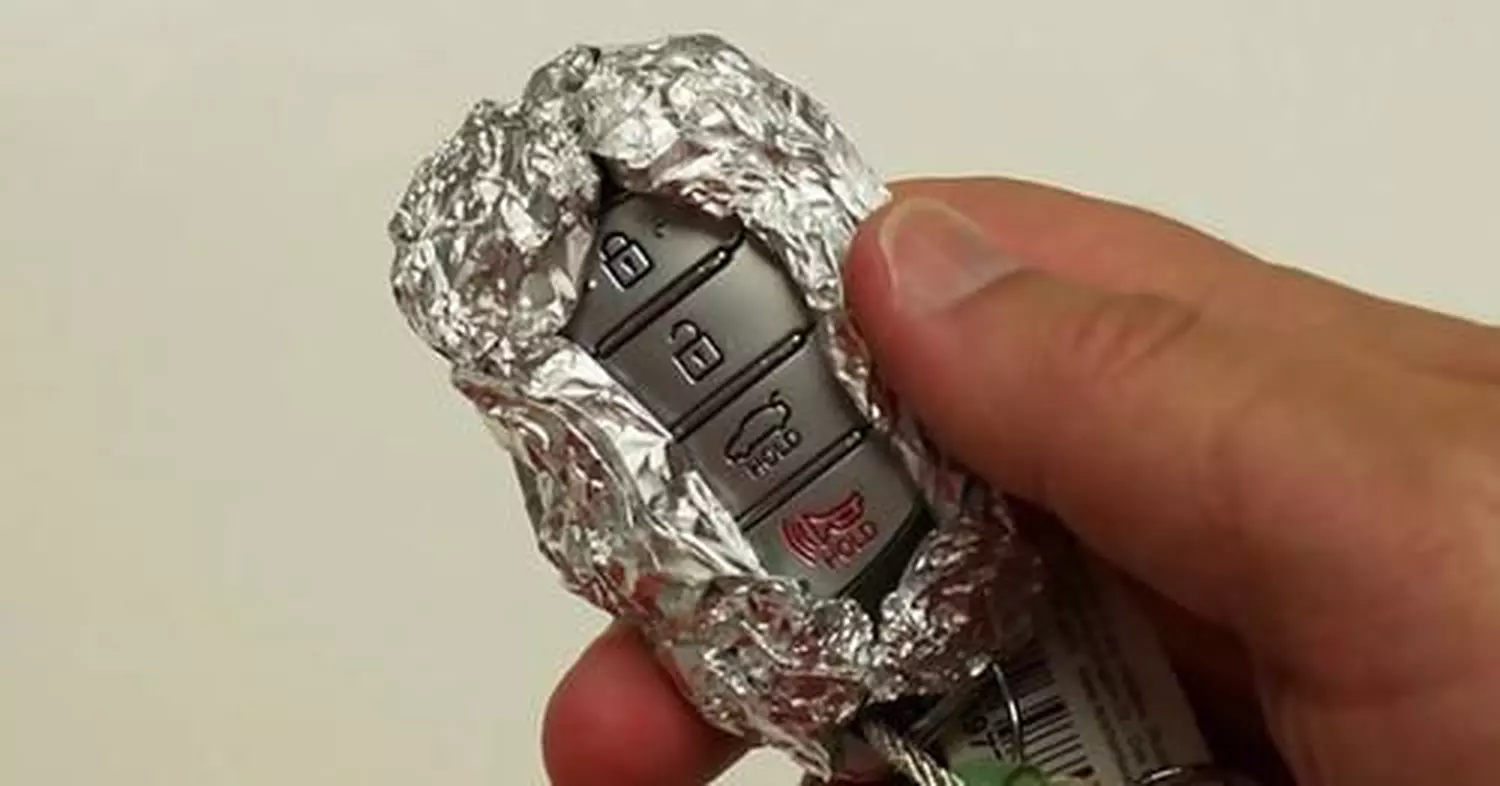
Modern vehicle security has become increasingly complex as criminals develop sophisticated methods to exploit wireless technologies. Keyless entry systems, while offering unprecedented convenience, have created new vulnerabilities that traditional car security never faced. The simple act of wrapping your car keys in aluminum foil has emerged as an effective countermeasure against these electronic threats. This basic household material provides surprisingly robust protection by blocking the radio frequency signals that thieves attempt to intercept. Understanding this technique requires examining both the electromagnetic properties that make it work and the evolving tactics criminals employ to bypass modern security features.
The science behind electromagnetic signal protection
Aluminum foil works as an effective barrier through a principle known as electromagnetic shielding. When you wrap your key fob completely in this conductive material, you create what physicists call a Faraday cage. This protective barrier prevents radio waves from penetrating to reach the electronic components inside your key. The conductivity of aluminum causes electromagnetic fields to redistribute around the exterior surface rather than passing through to the interior space.
Standard kitchen foil provides adequate thickness to block frequencies typically used by automotive systems, which generally operate between 315 and 433 MHz depending on manufacturer specifications. The electrons in the aluminum respond to incoming electromagnetic radiation by generating opposing currents that effectively cancel the external signals. Multiple layers enhance this protection significantly, creating redundant barriers that compensate for any microscopic gaps or imperfections in the wrapping. This shielding effect works bidirectionally, preventing both incoming commands from reaching your key and outgoing signals from escaping to potential interceptors.
The universal applicability of this method makes it particularly valuable for vehicle owners. Regardless of whether you drive a luxury sedan or an economy hatchback, the physics remains consistent. Signal blocking occurs independently of brand, model year, or specific wireless protocols your vehicle manufacturer employs. This simplicity stands in stark contrast to expensive commercial solutions that ultimately rely on identical principles. Just as intelligent people always say this when they disagree with conventional wisdom, sometimes the most straightforward approaches prove most effective.
Understanding modern vehicle theft techniques
Criminal methods have evolved dramatically beyond the stereotypical broken window and hot-wiring scenarios. Today’s thieves employ specialized electronic equipment capable of intercepting and replicating the communication between your key fob and vehicle. These devices, sometimes referred to as signal grabbers, can capture transmissions from considerable distances while remaining virtually undetectable to victims. The captured codes allow unauthorized access without any physical damage to the vehicle.
Relay attacks represent an even more sophisticated threat that has become alarmingly common in residential areas. This technique involves two devices working in tandem : one positioned near your home to amplify the signal from keys stored inside, and another near your vehicle to receive and relay that amplified signal. The system essentially tricks your car into believing the authorized key is present, allowing thieves to unlock doors and start engines within seconds. These attacks can succeed even when keys are stored several rooms away from the parked vehicle.
The equipment required for such operations has become increasingly accessible and affordable through underground markets. What once required specialized knowledge and expensive technology can now be executed by opportunistic criminals with minimal investment. This democratization of theft technology explains why incidents have proliferated across suburban neighborhoods that traditionally experienced low crime rates. Vehicle owners who assume their cars remain safe simply because they’re parked in private driveways face genuine vulnerability. Much like maintaining daily habits that keep people active beyond 60, consistent security practices protect against evolving threats.
Proper implementation for maximum effectiveness
Wrapping your key fob correctly determines whether this protection actually works. Incomplete coverage or improper technique can leave vulnerabilities that sophisticated equipment might exploit. The wrapping process requires attention to several critical factors to ensure complete signal isolation. Begin by selecting a piece of foil large enough to encase the entire key fob with overlapping edges on all sides.
Follow these essential steps for proper protection :
- Wrap the key fob completely, ensuring no parts remain exposed to air
- Apply at least two to three layers for enhanced durability and signal blocking
- Press and mold the foil around contours to eliminate air pockets
- Fold and seal all edges securely to prevent gaps where signals might escape
- Test the wrapping by attempting to operate your vehicle from nearby positions
Storage location matters nearly as much as the wrapping itself. Placing protected keys near exterior walls, windows, or doors can still expose them to relay amplification equipment. Interior locations provide superior security, particularly when combined with additional metal containers or areas naturally shielded by building materials. Many security professionals recommend placing wrapped keys in metal boxes or drawers that create supplementary electromagnetic barriers.
Regular maintenance ensures continued protection. Aluminum foil deteriorates with repeated handling, developing tears or thin spots that compromise shielding effectiveness. Replace the wrapping periodically, especially if you notice visible damage or successful vehicle operation while keys remain supposedly blocked. Commercial RFID-blocking pouches offer more convenient handling while employing identical shielding principles. These fabric-based solutions incorporate metallic threading that creates permanent electromagnetic barriers without requiring periodic replacement. Understanding these behavioral indicators, similar to how phone habits reveal narcissistic tendencies, helps identify when protective measures need reinforcement.
Creating comprehensive protection strategies
Layered security approaches provide the most effective defense against determined criminals who adapt to single-point protections. While foil wrapping addresses signal interception vulnerabilities, combining multiple security measures creates overlapping barriers that significantly increase the difficulty and risk for potential thieves. Physical deterrents complement electronic protection by adding visible obstacles and psychological barriers.
Consider implementing steering wheel locks, which force thieves to spend additional time in exposed positions. Audible alarm systems create unwanted attention that most criminals prefer avoiding. Visible security decals and flashing dashboard lights signal that your vehicle employs multiple protection layers. Parking location choices dramatically affect theft risk, with well-illuminated areas near natural surveillance providing inherently safer environments than isolated or poorly lit spaces.
Regular maintenance of factory-installed security features ensures they function when needed. Many vehicle owners never test their alarm systems or immobilizers until after attempted theft incidents reveal system failures. Professional security assessments identify model-specific vulnerabilities and recommend appropriate countermeasures based on local crime patterns. The combination of low-technology solutions with advanced security systems addresses multiple threat vectors simultaneously, acknowledging that criminal techniques continue evolving and requiring adaptive strategies that counter both current and emerging methods effectively.
