
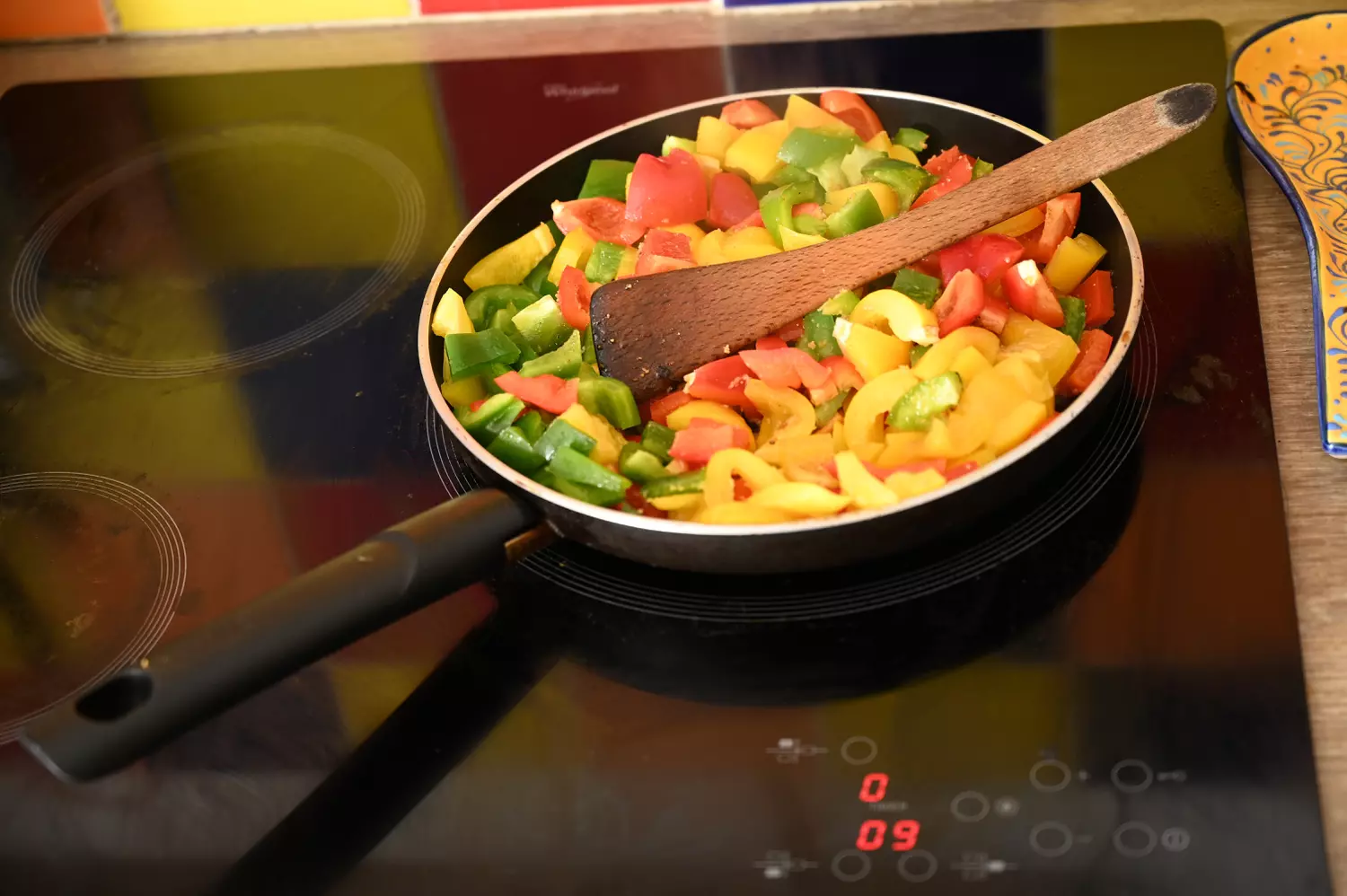
When you open your kitchen drawer or glance at your cookware hanging on the wall, you’ve probably noticed that small circular opening at the end of many pan and pot handles. Most people assume this design feature serves primarily as a convenient way to hang their cookware on hooks or pegboards. While this storage solution works perfectly well, it’s actually not the primary reason why manufacturers include this opening. The real purpose behind this seemingly simple design element is far more practical and relates directly to improving your cooking experience while maintaining a cleaner, more organized workspace.
Why manufacturers include this opening in cookware handles
The hole at the end of your pan handle actually serves as an integrated utensil holder during the cooking process. This ingenious feature was designed to give you a convenient place to rest your wooden spoon, spatula, or other cooking implements while you’re actively preparing meals. Instead of placing your stirring spoon on the countertop, where it can create mess and take up valuable space, or leaving it inside the pot where it might slip down or get too hot, you can simply insert the handle through this opening.
This functionality becomes particularly valuable when you’re working with multiple dishes simultaneously or cooking in a small kitchen where counter space is limited. By keeping your utensil suspended through the hole, you maintain easy access to your stirring implement without cluttering your workspace. The design prevents drips and splatters from spreading across your cooking surface, which means less cleanup after meal preparation. Additionally, this positioning keeps the business end of your spoon or spatula away from the hot burner, reducing the risk of burns or melted plastic if you’re using synthetic utensils.
Professional chefs and experienced home cooks appreciate this feature because it streamlines the cooking workflow. When you need to stir, flip, or taste, your utensil is right there within arm’s reach. Just as important as having clean cookware is maintaining overall kitchen cleanliness, which is why knowing the best products for removing oven stains can complement your efficient cooking setup. The suspended position also allows any excess liquid or sauce to drip back into the pan rather than pooling on your counter or stovetop.
Practical advantages during meal preparation
Understanding this hidden functionality transforms how you approach cooking tasks. When sautéing vegetables, simmering sauces, or preparing pasta, you can keep your wooden spoon positioned through the handle hole, ensuring it stays clean and accessible. This is especially beneficial when preparing dishes that require frequent stirring or monitoring, as you won’t need to constantly pick up and put down your utensil from a plate or rest.
The benefits extend beyond simple convenience. By utilizing this feature, you’re actually practicing better kitchen hygiene. Your utensil isn’t making contact with potentially contaminated surfaces, and you’re not creating additional items to wash after cooking. In compact cooking environments where every square inch matters, this vertical storage solution during active cooking makes a significant difference. The technique works particularly well for :
- Stirring soups and stews that require periodic attention
- Flipping ingredients in a sauté pan without setting down your spatula
- Tasting dishes while keeping your spoon readily available
- Managing multiple pots on the stove simultaneously
- Preventing cross-contamination between different dishes
However, there’s an important caveat to consider. Not every cooking utensil will fit through every handle hole. The diameter of these openings varies by manufacturer and cookware type, and many wooden spoons or spatulas have handles that are too thick to pass through. If you find this feature appealing and want to use it regularly, you may need to purchase cooking utensils specifically designed with slimmer handles that can accommodate this storage method.
Maximizing your kitchen organization strategies
Beyond the immediate cooking benefits, understanding the true purpose of this design feature encourages you to think more critically about your kitchen tools and their intended uses. Many everyday items in our homes have multiple functions or hidden purposes that we overlook simply because we’ve developed habitual ways of using them. Just as maintaining clean windows prevents condensation issues with effective prevention methods for window condensation, understanding your cookware helps you maintain a more functional kitchen.
This revelation about pan handles fits into a broader philosophy of optimizing kitchen efficiency. When you understand how each tool functions at its best, you can create smoother workflows and reduce unnecessary mess. The same principle applies to other aspects of home management, whether you’re learning about which plants benefit from coffee grounds or discovering alternative cleaning solutions for bathroom maintenance.
Even if you’ve been using the handle hole primarily for hanging storage, there’s no reason to stop. The opening serves both purposes effectively. You can hang your cookware when it’s not in use and utilize the hole as a utensil rest during active cooking. This dual functionality represents thoughtful design that maximizes utility without adding complexity or cost to the manufacturing process. Next time you’re stirring a pot of chili or flipping vegetables in a wok, try threading your wooden spoon through that handle hole and experience the convenience for yourself.
