
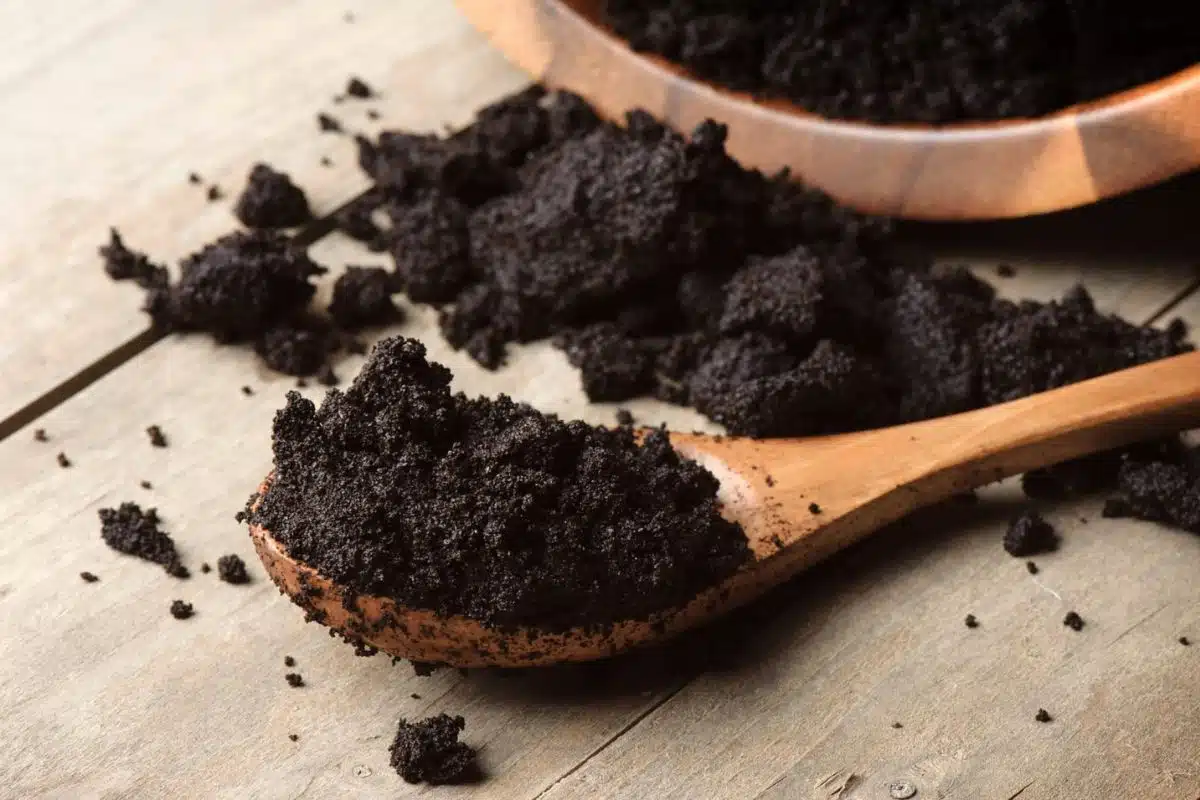
Every morning ritual of brewing coffee could hold the key to revolutionizing sustainable construction. Scientists at RMIT University in Australia have made a groundbreaking discovery : coffee grounds transformed through pyrolysis can enhance concrete strength by an impressive 30%. This remarkable finding offers both environmental and structural benefits that the building industry desperately needs.
From waste to wonder material through thermal transformation
The secret lies in a fascinating process called pyrolysis, where organic materials undergo thermal decomposition without oxygen. Coffee grounds heated under these specific conditions transform into biochar, a carbon-rich substance with exceptional properties. Unlike simple burning, this controlled heating preserves the material’s structural integrity while creating a highly absorbent compound.
This transformation isn’t merely academic curiosity. Globally, approximately 10 billion kilograms of coffee waste accumulate annually, typically ending up in landfills where decomposition releases methane, a greenhouse gas significantly more potent than carbon dioxide. By redirecting this waste stream toward construction applications, we’re addressing two environmental challenges simultaneously. The biochar created from coffee grounds becomes a valuable additive rather than an environmental liability.
The physical characteristics of coffee-derived biochar make it particularly suited for concrete reinforcement. Its porous structure and chemical composition interact favorably with cement matrices, creating stronger bonds between aggregate particles. Research teams have documented measurable improvements in compressive strength, durability, and resistance to environmental degradation. Just as people who drink coffee before breakfast develop certain behavioral patterns, concrete mixed with coffee biochar develops enhanced structural characteristics that set it apart from conventional mixtures.
Environmental and economic advantages reshaping construction practices
The integration of coffee grounds biochar represents more than technical innovation; it embodies a shift toward circular economy principles in construction. Traditional concrete production relies heavily on natural sand extraction, causing significant environmental disruption including habitat destruction, erosion, and ecosystem imbalance. Substituting even a portion of conventional aggregates with recycled biochar reduces pressure on these natural resources.
Beyond resource conservation, this approach delivers tangible economic benefits. Construction companies face mounting costs for both raw material procurement and waste disposal. Coffee grounds biochar addresses both concerns, creating value from what was previously considered worthless. The transformation process itself requires relatively modest energy inputs compared to traditional material processing, further enhancing the economic viability.
The broader implications extend to urban sustainability. Cities worldwide struggle with waste management challenges while simultaneously demanding more resilient infrastructure. Similar to how innovative furniture solutions transform small living spaces, this material innovation transforms how we think about construction waste and resource utilization. Buildings constructed with coffee-enhanced concrete contribute to reduced carbon footprints while potentially offering superior longevity.
Key advantages of coffee biochar concrete include :
- Enhanced structural strength up to 30% improvement
- Reduced methane emissions from diverted organic waste
- Lower dependency on natural sand extraction
- Cost savings through waste valorization
- Improved concrete durability and weather resistance
Practical applications and future development pathways
Implementation possibilities span from residential construction to major infrastructure projects. Sidewalks, building foundations, retaining walls, and structural components could all benefit from this enhanced concrete formulation. Engineers envision applications in both new construction and restoration projects, where improved material performance justifies adoption despite initial unfamiliarity.
However, several challenges require attention before widespread commercialization. Long-term performance under varying climatic conditions needs comprehensive evaluation. Will coffee-biochar concrete maintain its enhanced properties through decades of freeze-thaw cycles, high humidity, or extreme temperatures ? These questions demand rigorous testing protocols and extended observation periods. Much like habits that sustain engagement throughout retirement, sustainable building practices require consistent performance over extended timeframes.
Regulatory frameworks present another consideration. Building codes and standards vary internationally, often requiring extensive documentation before approving novel materials. Securing necessary certifications involves demonstrating consistent quality, reliable sourcing, and predictable behavior under standardized testing conditions. These regulatory pathways, while sometimes bureaucratically complex, ensure public safety and structural integrity.
The sourcing and processing infrastructure also needs development. Currently, coffee grounds collection remains decentralized and unsystematic. Establishing reliable supply chains connecting cafés, restaurants, and households to processing facilities requires coordination and investment. Similarly, pyrolysis equipment must become more accessible and efficient to handle the volumes necessary for significant construction applications.
Looking ahead toward regenerative building practices
This discovery aligns with emerging biomimicry principles, where nature-inspired solutions address human challenges. Rather than fighting natural processes, we’re learning to work with them, transforming organic cycles into productive systems. The construction industry, historically conservative regarding material innovations, is gradually embracing such forward-thinking approaches driven by environmental necessity and economic opportunity.
Population growth and urbanization continue accelerating, placing unprecedented demands on building materials and waste management systems. Traditional approaches cannot sustainably meet these demands. Innovative solutions like coffee biochar concrete offer pathways toward truly regenerative practices where today’s waste becomes tomorrow’s infrastructure. Just as certain morning practices contribute to healthier aging, sustainable material choices today contribute to healthier built environments for future generations.
The enthusiasm among construction professionals reflects recognition of these realities. Early adopters see competitive advantages in sustainability credentials, reduced material costs, and improved structural performance. As climate consciousness influences purchasing decisions and building regulations tighten environmental standards, materials demonstrating both ecological responsibility and technical superiority will command market preference.
Parallel innovations may emerge as researchers explore other organic waste streams applicable to construction. Agricultural residues, food processing byproducts, and industrial organic waste all represent potential feedstocks for similar transformations. Coffee grounds simply represent an accessible, abundant starting point demonstrating broader possibilities. The adaptability shown by those rebuilding after hardships mirrors the construction industry’s capacity to evolve toward sustainable practices when presented with viable alternatives.
The transformation of coffee grounds into concrete reinforcement exemplifies human ingenuity addressing environmental challenges through practical innovation. While technical refinement and regulatory approval require patience, the fundamental concept demonstrates remarkable promise for creating stronger, more sustainable infrastructure from materials we currently discard.
Source : https://www.sciencedirect.com/science/article/pii/S0959652623023636
