
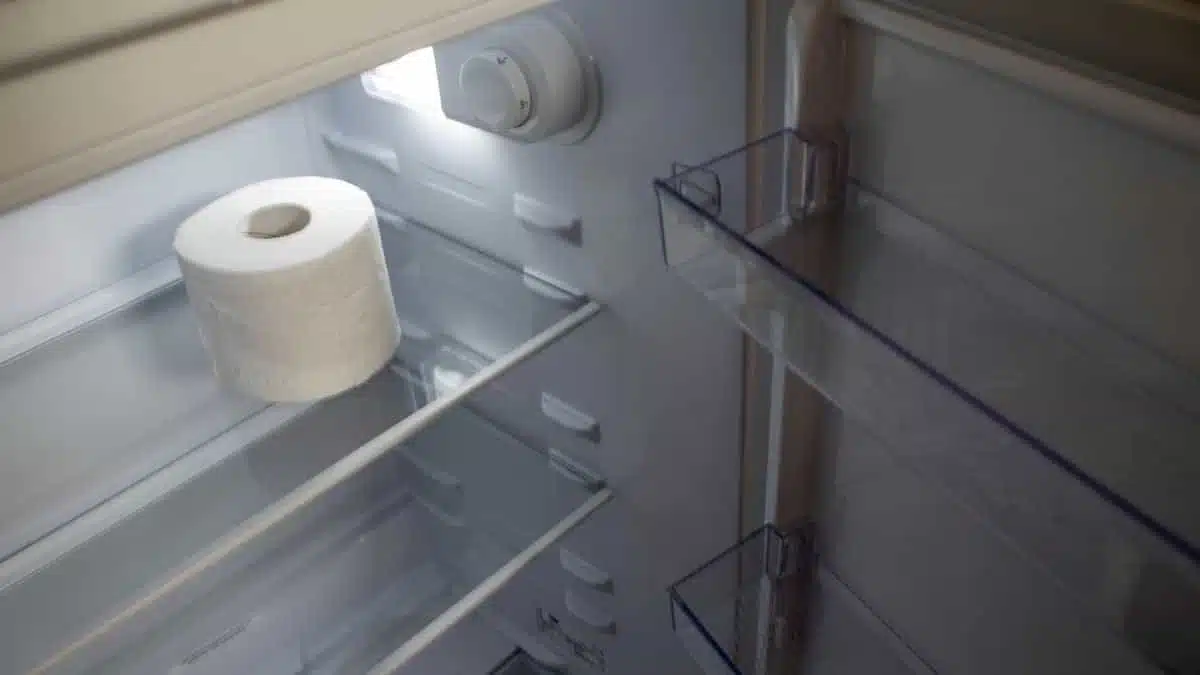
When unexpected tricks catch on in households around the world, there’s usually a practical reason behind them. One such surprising method involves placing an ordinary toilet roll inside your refrigerator. This unusual approach has gained popularity because it addresses common refrigerator problems using an item most people already have at home. The technique relies on the absorbent nature of paper products to tackle moisture buildup and lingering food smells that affect freshness.
While it might seem odd at first, this hack makes perfect sense once you understand how refrigerators function and what happens when humidity levels rise inside cooling compartments. The enclosed environment creates condensation, especially when warm air enters during frequent door openings. Over time, excessive moisture accumulates and creates conditions where bacteria thrive, food spoils faster, and unpleasant odors develop.
Understanding moisture problems in cooling compartments
Refrigerators maintain cool temperatures to preserve food, but this environment naturally generates moisture accumulation issues. Every time you open the door, warm air rushes in and meets the cold interior surfaces. This temperature difference causes water vapor to condense on walls, shelves, and even food packaging. When this moisture has nowhere to go, it settles throughout the compartment and creates multiple problems for food storage.
The vegetable drawers typically experience the most humidity since fresh produce releases water as it ages. This trapped dampness accelerates decomposition and can lead to mold formation on fruits and vegetables. Similarly, uncovered foods and leftovers contribute their own moisture to the air, compounding the issue. Without proper humidity control, your refrigerator becomes less efficient at preserving food quality and maintaining hygienic conditions.
Beyond spoilage concerns, excess humidity creates an environment where odors intensify and spread between different foods. Strong-smelling items like fish, pungent cheeses, and aromatic leftovers release particles that float through moist air and settle on other items. This cross-contamination affects taste and makes everything in your refrigerator smell similar. The challenge lies in finding an effective solution that addresses both moisture and odor issues simultaneously.
Maintaining proper conditions in your refrigerator shares similarities with other household preservation methods. Just as freezer storage requires smart strategies to prevent spoilage, your refrigerator benefits from thoughtful approaches that extend freshness. Simple interventions often prove most effective for everyday maintenance challenges.
How absorbent paper controls refrigerator environments
The cellulose fibers in toilet paper possess remarkable properties for capturing water molecules. These fibers create an extensive surface area with microscopic structures that work through capillary action. When placed in a humid environment, the paper naturally draws moisture toward itself and holds it within its structure. This process continues until the material reaches saturation, making it an efficient passive dehumidifier for small enclosed spaces.
This moisture-trapping ability translates directly to odor control because many food smells travel through air on water droplets. By absorbing the surrounding humidity, toilet paper simultaneously captures odor molecules that would otherwise circulate throughout your refrigerator. The result is a fresher environment where foods maintain their individual flavors and unpleasant smells diminish noticeably within days of implementation.
Placement strategy determines effectiveness significantly. Consider these optimal locations for maximum benefit :
- The back wall area where air circulation is minimal and condensation forms regularly
- Inside vegetable drawers where produce releases the most moisture
- On middle shelves near strong-smelling foods that need odor containment
- Behind milk containers or juice cartons where space allows and humidity tends to gather
Replace your toilet roll every two weeks or when it feels noticeably damp to the touch. This regular maintenance ensures continuous performance since saturated paper loses its absorption capacity. Some households prefer using partial rolls to save space, which works equally well as long as sufficient paper surface remains exposed to the air.
Practical steps for implementing this freshness technique
Starting this practice requires nothing more than a fresh, unused toilet roll designated specifically for refrigerator use. Choose unscented varieties if you’re concerned about introducing artificial fragrances into your food storage area. The plain white options work perfectly since their sole purpose is absorption rather than aesthetics or fragrance delivery.
Before placing your roll inside, take time to clean your refrigerator thoroughly. Remove expired items, wipe down surfaces, and address any existing mold or spills. This preparation allows the toilet paper to maintain freshness rather than simply masking existing problems. Once your refrigerator is clean, position the roll in your chosen location where it won’t interfere with food storage or get crushed by items.
Monitor results over the following week by paying attention to how food smells when you open containers and whether the overall refrigerator odor improves. Most users notice a difference within three to five days as the paper absorbs ambient moisture and trapped odors dissipate. If certain areas still develop humidity problems, consider adding a second roll in those trouble spots for enhanced coverage.
This technique complements other household maintenance practices. Much like natural cleaning methods work effectively for bathroom maintenance, simple solutions often address kitchen concerns without harsh chemicals or expensive equipment. The minimal investment makes experimentation risk-free for any household.
Extending this approach beyond refrigerators
Once you understand the moisture-absorbing principle, applications extend throughout your home wherever dampness or mustiness pose problems. Sports equipment bags benefit from toilet rolls that combat sweaty odors after gym sessions or outdoor activities. Shoe storage areas stay fresher when rolls placed inside closets capture humidity that causes musty smells in leather and fabric footwear.
Basement corners prone to dampness improve with strategically placed rolls that work as small dehumidifiers during humid seasons. Some people place them in luggage between trips to prevent stale odors from developing in closed suitcases. Cars parked in humid climates or garages without climate control also benefit from this inexpensive moisture management approach.
The versatility stems from toilet paper’s original design purpose. Manufacturers engineer these products to be highly absorbent while remaining soft and disposable. These same qualities make them unexpectedly useful for household applications beyond bathrooms. Whether controlling humidity in refrigerators or freshening enclosed spaces, the fundamental properties remain consistent and effective across different environments.
This practical hack demonstrates how rethinking everyday items reveals new solutions to common problems. Before investing in specialized dehumidifiers or odor-neutralizing products, try this simple method that costs pennies and delivers noticeable improvements in refrigerator freshness and overall food preservation quality.
